1. Introduction
In the 20th century, the construction industry is booming. Projects are becoming larger, taller, longer, and deeper, driven by rapid urbanization. While this growth brings opportunities, it also brings increased complexity and safety risks.
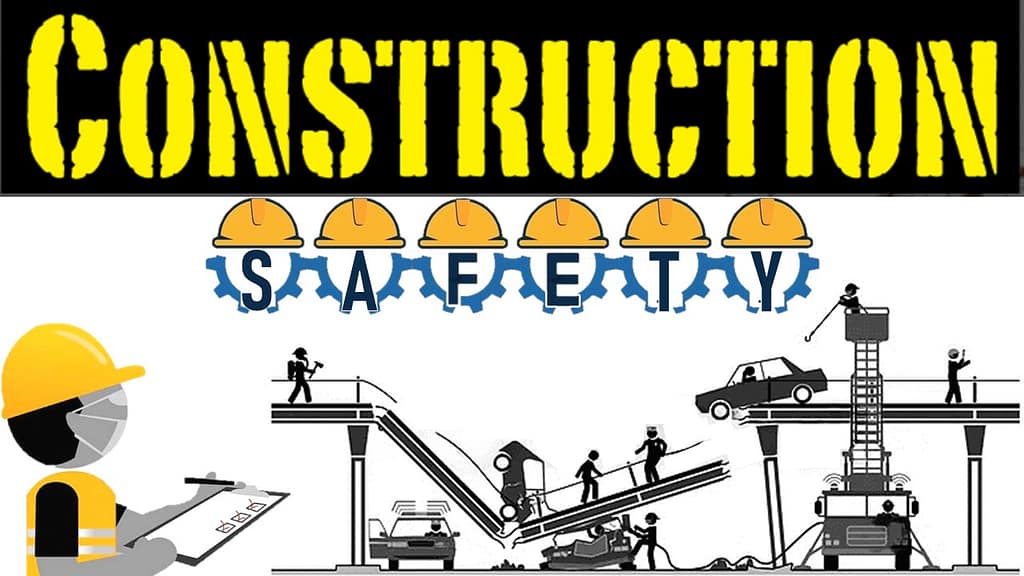
When we think of construction safety, PPE (Personal Protective Equipment) like helmets, aprons, and safety shoes usually come to mind. But safety in construction extends far beyond PPE.
2. Why Safety Matters
Civil engineers work on diverse projects—bridges, highways, buildings, power plants, airports—and must ensure that these structures are safe for public use.
A single margin of error can lead to catastrophic consequences:
- Loss of public funds
- Damage to company reputation
- Injuries or fatalities
Goal of a successful project:
Not just completion, but completion with the highest safety standards.
3. The Football Analogy
To better understand safety in construction, let’s compare it to a football match.
Key Roles in the Game:
- Match – Construction project
- Audience – Taxpayers
- Duration – Project timeline
- Goal – People’s safety
- Team A – Off-ground team (planning & strategy)
- Team B – On-ground team (execution)
- Referee 1 – Safety Officer
- Referee 2 – Environmental Officer
- Line Referee – Sanctioning Authorities
- Cameraman – Maintenance team
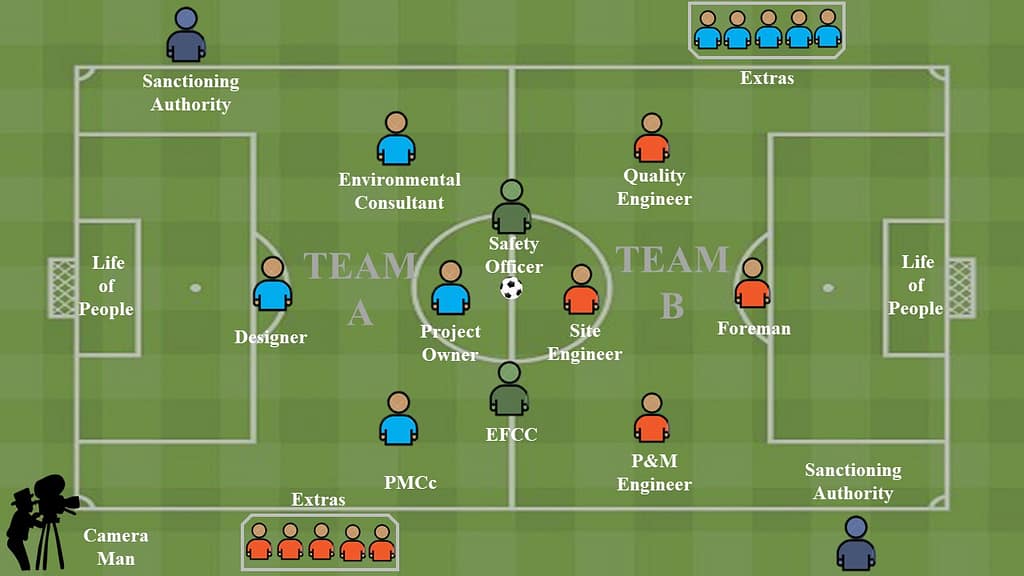
4. Team A – Off-Ground Team (Planning & Strategy)
Responsible for design, approvals, and planning.
- Stakeholders – Allocate budgets, influence project timelines.
- PMC (Project Management Consultant) – Incorporate safety into tender documents, advise stakeholders.
- Designers – Create safe and stable structural designs.
- Environmental Consultant (EC) – Maintain ecological balance, conduct reliable Environmental Impact Assessments (EIA).
5. Team B – On-Ground Team (Execution)
Responsible for implementing the plan on site.
- Site Engineers – Interpret and implement drawings correctly.
- Plant & Machinery Engineers – Ensure safe operation of equipment.
- Quality Engineers – Verify material quality and compliance.
- Foremen – Supervise labor, enforce safety practices, ensure work quality.
6. Referees – Safety Enforcement
- Safety Officer – Educates workers on hazards, ensures safe site practices.
- Environmental Officer – Protects natural resources, prevents pollution.
- Sanctioning Authorities – Approve work as per legal and safety standards.
Unofficial Referee:
- Cameraman (Maintenance Team) – Conduct audits, inspections, and recommend repairs if needed.
7. Common Mistakes in the ‘Match’
Team A Mistakes:
- Ignoring temporary loads in design
- Poor contractor qualification criteria
- Specifying underpowered equipment for cost savings
- Inadequate pre-tender due diligence
- Missing required approvals
Team B Mistakes:
- Ignoring construction methodology
- Using substandard materials
- Making design changes without consulting designers
- Disputes with authorities
- Poor documentation of work
8. Penalties
If rules are broken, referees can impose penalties during or after the match.
Even missed violations can be caught later during inspections, leading to post-completion penalties.
9. Winning the Game
Both teams win if the completed structure:
- Serves its purpose
- Maintains safety over time
- Protects public life
10. Summary
Construction safety is everyone’s responsibility—from planners to workers.
By following guidelines, frameworks, norms, and standards, we can safeguard survival and ensure every project is a true success.
Blog by: Mirajj Thaker